No Tax Changes Without Spending Restraint
Prime Minister John Key’s belief that we should strive for a more efficient tax system without implementing constitutional restraints against excessive Government spending is stupid, ACT New Zealand Finance Spokesman Sir Roger Douglas said today.
"We’ve all played this game before. One Government will give us a more efficient taxation system, then another will come into power and all those taxes will increase. Government spending will soar. That will lead to deficits, which will create a need to make the tax system more efficient again, thus repeating the cycle," Sir Roger said.
"The spending cuts must come first. Once we have cut spending, then we can cut taxes. If we want to make the tax system more efficient, we need constitutional restraints against excessive levels of Government expenditure. It is only when we have stopped the Government from exploiting the taxpayer that we can aim for efficiency.
"It seems that Labour always come into Government with grand visions for more state spending and massive social programs. If National think its role is to only temporarily freeze the growth in state spending, then it’s no wonder we are sacrificing more and more of our resources to bureaucrats and politicians in Wellington,"Sir Roger said.
ENDS
The Speech That Goff Should Deliver
Tomorrow Labour Leader Phil Goff is planning to deliver a speech on behalf of Prime Minister John Key. I thought that it might be a good idea to jot down some notes for what I would say if I were Phil Goff speaking on behalf of the Labour Party. I thought it best to start the apology by detailing all that he should be sorry for in the nine years he served in the 5th Labour Government, and then to move on to apologising for his attempts to gain media attention through populist trash talk since becoming Leader of the Opposition.
“The most general apology that I need to make on behalf of the Labour Party is for confusing the intention of a policy with the outcomes it produces. I am sorry for thinking that the mere intention of helping those who were least well off actually did help them. I have now come to realise that, more often than not, those most harmed by a policy are those it was usually intended to help.
“First, let me apologise to the thousands of young people who have lost their jobs because of our support for abolishing the youth minimum wage. If it was easy to lift wages without creating job losses, then we would set an extraordinarily high minimum wage. Unfortunately, wage increases which are not driven by increases in productivity merely exacerbate unemployment.
So, to those 13,000 young people who have lost their jobs because of what we did, I am sorry. I am responsible for your inability to find a job, I am responsible for holding back your opportunity to gain skills and experience. In particular, I wish to apologise to the 39 percent of Maori between the ages of 15 and 19 who are now unemployed. If only National had the guts to do what’s right and get rid of the minimum wage legislation, you would have an opportunity to get ahead.
Second, let me apologise to all those who receive a Government benefit. I now realise that the structure of our welfare system is ensnaring those who most need help by creating perverse incentives that punish success. In particularly, I humbly apologise for the Working for Families package. Most recipients of Working for Families now pay effective marginal tax rates in excess of 50 percent. Some pay in excess of 100 percent. We did that to you – trapped you in poverty by no longer rewarding hard work – and I apologise to all those who are struggling against Government to get ahead.
Third, let me apologise to all those school students who would desperately like to escape from their failing local school. I want to apologise to the 22 percent of students this year who will leave school unable to read or write. Many parents would like to enrol their kids in schools out of zone – in schools that are more likely to meet their needs. I apologise for thwarting the choices that thousands of parents would like to make, by introducing strict zoning requirements for schools. Most of all, I am sorry for the fact that wealthy people do have school choice, while the poorest are the ones who have none. I am sorry for creating two classes of pupil.
Fourth, I want to apologise to all those who die on waiting lists. By having a public health system, we have effectively stripped individuals of choices and control over their own health spending, and have allowed the Ministry to decide who is worthy of having an operation. I am sorry to those individuals and the suffering that their families have endured. Moreover, I, Phil Goff, want to apologise for perpetuating the myth that we have “free” healthcare. The cost of healthcare now amounts to 54 cents in every dollar of personal tax paid by individuals. I’m sorry that our health system costs so much and doesn’t deliver for those in need.
Fifth, I am sorry to all taxpayers, because I thought that the Government could pick winners. I am sorry for supporting tax subsidies for the racing and film industry. I forgot that that kind of economic planning was the hallmark of Muldoon’s time, and I apologise for repeating his errors.
I am sorry for misleading the New Zealand public and trying to justify these programs on the basis that they “create jobs.” The tax subsidy merely sees resources used in racing or film as opposed to a more commercially sound project. For the jobs it creates somewhere, there are jobs lost elsewhere. At best, it is neutral on the job front. In reality, it is worse than that, because politicians tend to be poor investors.
Sixth, I am sorry to every superannuitant in this country. When the state controls your entitlement to superannuation, we effectively discriminate against those groups which have shorter life expectancy – and so I apologise to Maori and Pacific Islanders in particular. More generally, I am sorry for continuing with a pay-as-you-go system. I know that the effect of compound interest sees every dollar invested by an 18 year old today return 10 dollars on retirement – and although we could all retire with $1 million in the bank, I am sorry that most end up with a measly $240 a week. The Labour Party apologises to you all.
Seventh, I am sorry that Government monopolies are so expensive, when I know that the solution was competition. Monopolies are never good – be they public or private. Monopolies are always arrogant, controlling, and expensive. I am sorry that I did not force Government run schools and hospitals to compete against each other.
Eighth, I am sorry for populist vote buying. I am sorry that we sold out the New Zealand taxpayer to pay for election bribes like the Supergold Card and interest free student loans. I am sorry that middle New Zealand now pays for these benefits, most of which are consumed by the wealthy, not the poor. Those students who receive a benefit today will be forced to pay for that benefit over the next 45 years. That hardly seems interest free at all.
Ninth, I am sorry for how we treated Maori. While my Government fostered an environment that focussed on historical grievance, we created more problems when we stripped Maori of the right to seek title to the seabed and foreshore. I am sorry for that modern day land grab. I am also sorry that we did nothing to improve the education that Maori get. I am sorry just last week for saying I would govern for the “many, not the few,” which has the implication that I will continue to sell-out Maoridom when it does well in the polls.
Tenth, I apologise for Government ownership of commercial assets. I apologise for this because the absence of commercial ownership has seen these businesses underperform. I realise, as I understood in the 80s, that politicians are just not good at driving performance in private industry. That is why this year the Government will be forced to hand out more money to the failing railroads. I am sorry for hitting you all with that bill.
Most of all, though, I am sorry for convincing many of you that the way to help the poor was through Government. I, Phil Goff, on behalf of the Labour Party, am sorry that those with the lowest incomes are forced to pay to send the children of wealthy parents to University, to pay for superannuation which they often will not collect, and are forced to send their children into schools that fail to educate them.
I am sorry that this will continue as well. We have a National Government whose decisions in the coming year will be done on the basis of the latest polling they have undertaken, which likely means more middle class welfare, more state control, more failure. I am sorry that your latest political masters are continuing a tradition of doing what is easy, rather than what is right. I am sorry that there is no change on the horizon.”
If Phil Goff was being honest with himself this is the speech that he should give. You will be able to judge tomorrow if he is going to continue down the populist path or face up to the problems that New Zealand faces.
Heather Roy's Diary
Copenhagen And Climate Change
While it is common knowledge that Denmark recently played host to the international Climate Conference, most people are only dimly aware of just what went on - or that, despite a massive turnout of representatives from different governments and organisations, the entire affair was largely unsuccessful.
Although 20,000 is the figure quoted most often, this doesn't include the large number of journalists and demonstrators who were there as well. In fact the Danes, determined to be good hosts, provided generous facilities in Copenhagen's Bella Centre - but the centre holds only 15,000 people and 35,000 had asked to attend.
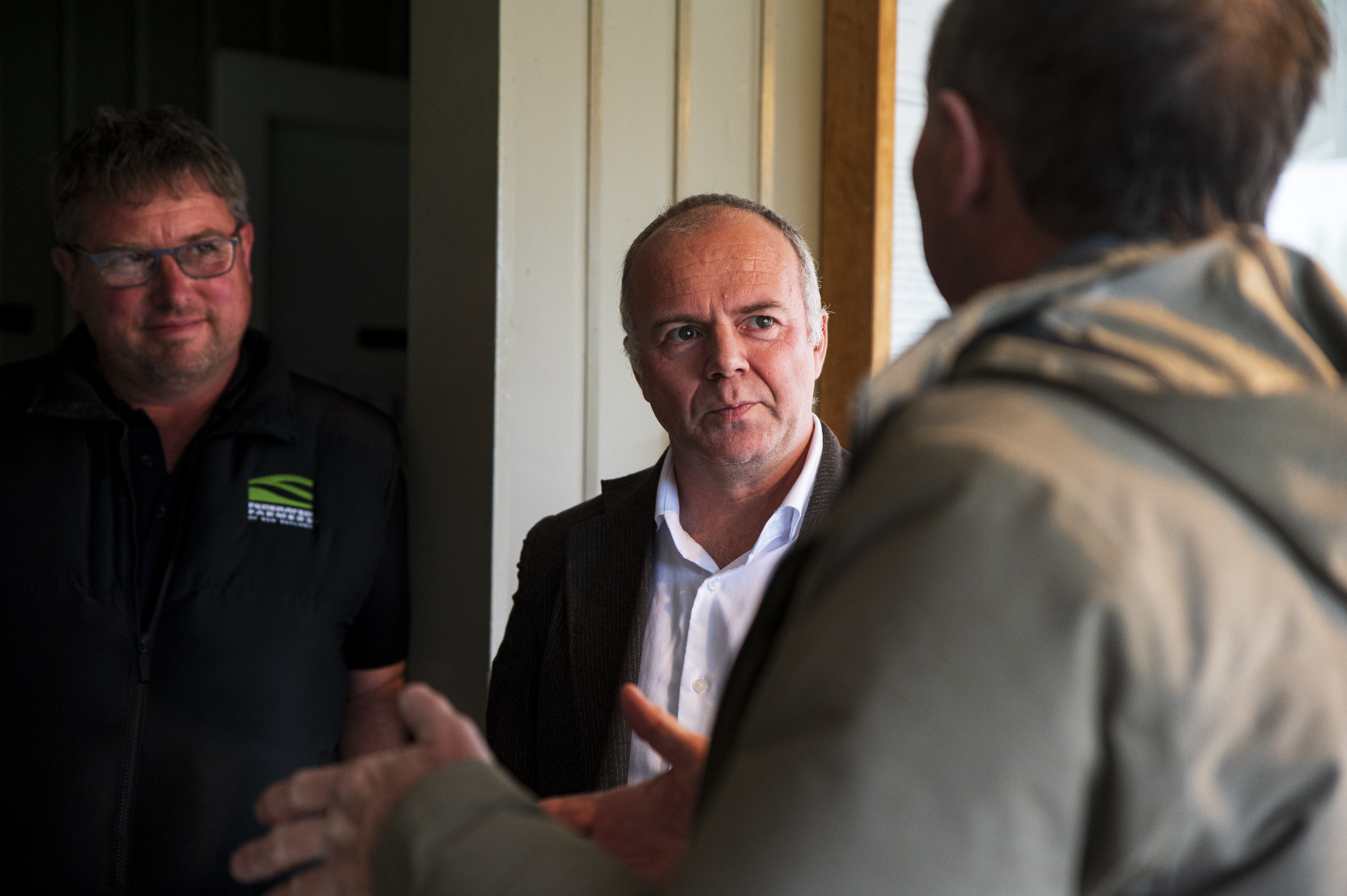
Some people realised immediately that the sheer numbers in attendance would be impediment serious decision-making: despite being invited, Federated Farmers President Don Nicolson decided to save the planet one airfare at a time - by eschewing the summit he saved around 6.6 tonnes of carbon dioxide (according to carbonfootprint.com). He said:
"There's no point pretending the opening stanza of Copenhagen will be anything but a massive photo opportunity."
Prime Minister John Key had the right instincts and didn't intend to go - but came under intense pressure. Many were predicting that the summit would turn out to be an expensive damp squib and New Zealand's delegation was modest compared to Australia's 114.
In the end no binding agreements were made - although it had been widely anticipated that wealthy countries would pledge to make an 80 percent reduction in carbon dioxide emissions with 1990 levels being the base rate.
At the time, I was horrified at the thought that New Zealand would sign up to such an agreement. As the greenhouse effect is also caused by gases other than carbon dioxide, we must also consider the methane emitted by sheep and cattle. To dramatically reduce greenhouse emissions, we would have to drastically reduce our livestock numbers - devastating our economy. If other countries followed suit there would be a huge shortage of meat, wool and dairy products - a disaster of the first order.
Fortunately, this didn't happen as the Chinese refused to commit to any reduction - although they did agree to reduce their greenhouse gas emissions in relative terms: if production went up they would increase emissions by less than the increase in production.
Although roundly denounced for "ruining" the Copenhagen agreement, little consideration has been given to the possibility that the Chinese acted on principle - if they are unconvinced by the scientific argument for global warming, their attitude is perfectly reasonable.
In reality, everyone believes in climate change and it is generally accepted that it has been both much colder and much warmer in the past. Geologists generally believe we're enjoying an 'interglacial period' with the implication that another ice age is coming.
None of this knowledge helps predict what will happen in the next 100 years and it should be noted that the Copenhagen summit occurred just after British scientists were found to have been "massaging data" to make it fit with their previously stated views.
I readily confess that I don't know what will happen to world temperatures in the future - and I suspect many 'experts' don't know either. So far, ACT has seen no observational-based evidence of any warming trend in New Zealand that warrants grounds for concern. NIWA itself - which has made alarmist temperature projections based on data from unproven global climate change models - has accepted that our warming might be only two-thirds of any global temperature increases.
New Zealand would be better informed by an agency that focuses on assessing risks from trends in actual observational data. Knowledge gained from those assessments should then be used to revisit the guidance given to local authorities about likely future climate changes.
Copenhagen may be hailed as a failure, but I believe New Zealand was fortunate that no agreements were made. It would be foolhardy indeed to rush into decisions and make promises on the back of dubious information drawn from questionable science.
If we are to take any action on climate change and global warming it should be in the form of further research on biological and chemical methods to reduce agricultural emissions as - barring scientific breakthroughs - reducing these while maintaining production levels would be difficult. Determining the facts and plotting the most appropriate path - if any - should come before implementing any ill-thought out measure that could devastate our economy and dramatically reduce our standard of living.
Lest We Forget - The Infamous Under-Arm Bowl
Even today, few have forgotten the day of the infamous under-arm bowl.
While New Zealand and Australia have always shared a (usually) good-natured rivalry, Trans-Tasman sporting relations were pushed to breaking point on February 1 1981 when Australian cricketer Trevor Chappell bowled under-arm at the Melbourne Cricket Ground.
It was the final delivery of the limited-overs international, and New Zealand needed to score a six in order to tie the match. Australian captain Greg Chappell was taking no chances and ordered brother Trevor to bowl under-arm - a move that, while legal, was widely considered to be against the spirit of the game.
New Zealand lost, and the day went down in the history books of both nations with politicians on both sides wading into the controversy. Prime Minister Robert Muldoon described it as an act of cowardice, labelling it "the most disgusting incident I can recall in the history of cricket." Australian Prime Minister Malcolm Fraser agreed, calling it "contrary to the traditions of the game."
ENDS
Harsher Penalties For Possessing Knives
ACT New Zealand Law & Order Spokesman David Garrett today welcomed High Court Judge Justice Asher’s call for the Government to review laws on knife possession, and agreed that offenders should face tougher penalties.
"Carrying a knife without a reasonable excuse was once a serious offence that drew harsh penalties. In the softening up of the justice system that has occurred over the past 20 years the harsh penalties for knife possession have been lost. It is time for that to change," Mr Garrett said.
"People – particularly young men - will always get into conflict with one another – a situation that can be made worse by alcohol. What would normally be a case of assault can quickly become deadly when knives are involved. If individuals are unarmed the risk of serious harm reduces dramatically.
"It’s too easy for would-be offenders to pick up a knife without thinking of the consequences. We need to send a message that knife possession is not acceptable in our society and harsher penalties will do this.
"If the Government is serious in its claim of taking a tougher stance on law and order, this is an area it cannot ignore," Mr Garrett said.
ENDS
Minimum Wage Is Hurting Young NZers
It's very rich of Labour's Annette King to blame National for the high rate of unemployment for young New Zealanders when it is, in fact, Labour's abolition of youth rates that has caused this problem, ACT Finance Spokesman Sir Roger Douglas said today.
"Since youth rates were abolished in early 2008, the unemployment rate for 15-19 year-olds has almost doubled. The number of unemployed youth has risen by 18,800 people," Sir Roger said.
"It is pretty clear what is causing this to happen – if you look at the 10-year period before the abolition of youth rates, youth unemployment peaked at 15.9 percent. Today, it stands at 26.5 percent.
"An excessive minimum wage denies young people the opportunity to get a job, as employers cannot afford to hire them. When unemployed, they can't gain work experience, don't receive on-the-job training, and never develop a work ethic.
"If Annette King really cared about those young people who cannot find a job, she would end support for the policies that Labour voted for that caused it. Instead, she seems to think the solution is make-work schemes paid for by the taxpayer or hiding the problem by allowing more to become students.
"Labour has caused the excessive rise in youth unemployment and now wants taxpayers to pick up the tab," Sir Roger said.
ENDS