
Back
Press Release
Speech: Nicole McKee at ACT Mainland Campaign Launch
It is fantastic to be here in Christchurch, launching ACT's campaign on the Mainland.
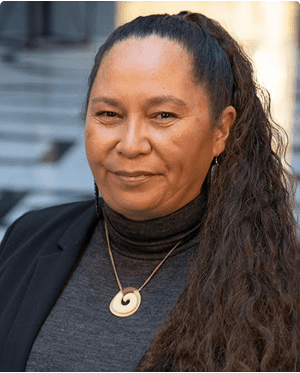
Nicole McKee

Good evening everyone.
It is fantastic to be here in Christchurch, launching ACT's campaign on the Mainland.
Coming to the South from Wellington is always a relief. It's a bit like a retreat, or perhaps even rehab. I think it should be compulsory.
Because when Wellington lawmakers and bureaucrats get together, intoxicated on power and other people's money, they can get some very strange ideas.
They think New Zealand's potential comes from meeting rooms, working groups, endless consultations and karakia.
But then you come to the Mainland - and remember where it really comes from.
It comes from the people that do things.
People who grow things. Build things. Mine things. Fix things. Invent things. Export things.
People who look after their families, their neighbours, and their businesses.
People who don't ask much from the bureaucracy, but who are forced to pay its bills - without thanks.
Ladies and Gentlemen, today I want to speak about the New Zealanders that Wellington forgot.
Because the Mainland is full of them - and they have something to teach the rest of the country.
30 years ago I learned to hunt. I didn’t learn because it was fun or that I found it was great for my mental health. I learned how to hunt specifically to put meat on the table to feed my family of six.
When the outdoors is part of your livelihood, you respect it. You notice changes - and you look after it.
That's why I have never bought into the idea that enterprise and the environment must be enemies.
Mainlanders make a lie of that every day.
Think about the ones farming mussels in the Marlborough Sounds, oysters in Southland.
If the water quality starts deteriorating, who is going to blow the whistle first?
Someone reading a report in Wellington? Or the person whose livelihood is growing in that water?
Let’s think about the skipper in Kaikōura whose customers have flown around the world to see whales.
Or, the high-country farmer who wants productive land to hand on to the next generation.
These people have skin in the game. And sometimes they do extraordinary things.
Up in North Canterbury there is an organisation called Hunters4Hope.
Hunters donate surplus venison. Volunteers get it processed into mince. Then it goes, free of charge, to organisations helping Canterbury families who need it. Tons and tons of venison has been donated to those struggling with the costs of feeding their families.
Think about that.
Hunters do it for the love of the game, conservation and to support their communities. They know there are families out there who could use the meat. So they use their skill set, get stuck in and help out.
They don't wait around for Wellington. In fact, Wellington's red tape around processing the meat is often the headache.
But let’s look further south while we’re at it.
The Fiordland Wapiti Foundation is another group of hunters, doing conservation work that would otherwise fall to taxpayers.
They manage deer and wapiti. They maintain huts and trap pests, protecting our native species.
My colleague Cameron Luxton has championed their work.
Because he also understands that hunters are conservationists too.
Sometimes government needs to provide certainty. Often, it just needs to get out of the way.
That is a very Mainland idea, and it is a very ACT idea.
Because ACT believes New Zealanders are capable people.
We don't see you as problems waiting for government solutions.
We see people with ideas, ambitions, skills, and a sense of responsibility to their families and neighbours.
Our job is to unlock that potential.
Look at the West Coast.
Mining isn't fashionable in Wellington - but the world needs minerals and the Coast has them. It also has skilled people ready to responsibly extract them.
The world is screaming out for critical minerals. If New Zealand won't supply them, somebody else will.
ACT would rather look for practical ways to say yes - than excuses to say no.
We don't have to pit economic progress against the environment. The people actually living beside these projects have every reason to care about both.
----------
That's the Mainland.
It is also one of the most internationally connected parts of New Zealand.
Wellington considers itself very international. There are embassies! Diplomatic receptions! Flights to important meetings with the UN!
But the South Island offers a different picture of what it means to be connected to the world.
Think of a dairy farmer in Canterbury.
Their livelihood hangs on global pricing.
They turn sunlight and rain into grass, grass into milk. It's a miracle they perform with world-leading efficiency.
They trade the milk for the global price, and before long, that milk is formula, giving life to growing babies in China, Indonesia, and the Middle East.
That is true internationalism.
Local winemakers put Marlborough and Central Otago on tables in countries most New Zealanders will never visit. Our miners produce materials put into complex electronics overseas.
And the world comes back to the Mainland.
People travel extraordinary distances to see this island's landscapes.
But they go home with tales of the people.
The farmer who gave them directions. The stranger who helped when their campervan broke down.
And something else that amazes foreign tourists: the honesty box.
It's an institution of the South, and if I can ask one thing of you tonight: never take it for granted.
Eggs, fruit, preserves, no-one standing guard, just a box for the money.
Someone has put the fruits of their effort on the side of the road and trusted a complete stranger to do the right thing.
I want New Zealand to remain that kind of country. A high-trust country.
But Wellington's instinct is to operate on exactly the opposite assumption.
If you own a firearm, you might be a criminal.
If you run a business, you might be exploiting somebody.
If you have a family trust and want to sell your own house, you'd better provide a mountain of paperwork to prove you're not laundering money.
If you want a beer with your mates, somebody thinks you need protecting from yourself.
ACT starts somewhere different.
Most people are decent. Most people follow the rules.
Government should focus its energy on the people actually causing harm.
That's why I've spent this term - working to change the balance.
We restored Three Strikes and put victims back at the heart of sentencing.
We're changing anti-money laundering rules so they focus on organised crime and serious financial offending instead of making ordinary families prove their legitimacy over and over again.
And we’ve rewritten our firearms laws so they focus on public safety while respecting responsible people who use firearms legally - for hunting, farming, pest control and sport.
An honesty box only works when most people are honest.
But a high-trust society also depends on consequences for the small number who aren't honest.
If someone steals from you, assaults you, burgles your home, or wrecks the business you've spent twenty years building, that is when government has a job to do.
That's where Wellington should be strong.
Instead, too often it is strong where it should be restrained and weak where it should be strong.
I'd like to shout out a local example for Christchurch.
You waited a long time for your new stadium – yes?
For its opening, thousands of rugby fans were coming to town, filling hotels, restaurants and bars.
Wellington had one last contribution to make. At midnight, everybody had to get out.
Outdated ANZAC Day rules meant bars were going to have to stop serving at midnight.
Thankfully Cameron Luxton looked at that and said: that's ridiculous.
His amendment to a bill before Parliament got the votes, and the law changed in time.
That's what ACT MPs are there to do.
Too often, Wellington looks at a pint of beer - and sees a threat needing to be neutralised.
I see something else. Especially in small towns and rural communities.
The local pub – the local pub is a place where neighbours meet. Where somebody who's worked alone all week gets to talk to another human being.
When a rural pub closes, we lose part of a community.
So when I see the public health lobby demanding ever more restrictions like more taxes on a pint, or making it harder for a brewery to sponsor a local sports team, I think about the New Zealanders Wellington doesn’t see.
They are not problems to be managed. They are adults. They make trade-offs. They look after each other. And they get on with it.
And yes, sometimes they just want to have a beer with their mates after work without needing permission from Wellington.
And that ladies and gentlemen is really the point of this campaign.
Because New Zealand’s potential is not scarce. It is everywhere. It is just too often blocked, slowed, or second-guessed.
And when you strip everything else away, it comes down to something very simple.
Do we trust people or not?
Because in the best of the Mainland, trust is not an abstract idea. It is how life actually works.
It is the honesty box on a roadside stall.
It is a farmer, a tradie, a small business owner, all making decisions every day without asking Wellington for permission first.
And most of the time, it works. Not because people are perfect, but because most people are decent.
That is the New Zealand we should be building policy around.
ACT’s view is that New Zealanders are capable. They respond to responsibility, and they create value when you let them.
Government’s job is not to stand in the way of that, but to clear the path.
That is what this campaign is about.
Unlocking the potential that is already here - not inventing it in Wellington.
The New Zealanders Wellington forgot - have not forgotten how this country works. They are still living it every day.
It is time government caught up.
Thank you everyone for your southern hospitality and for re-energising this poor Wellington soul right here.
Have a wonderful evening and thanks for coming along tonight.