
Back
Make Farming Fun Again
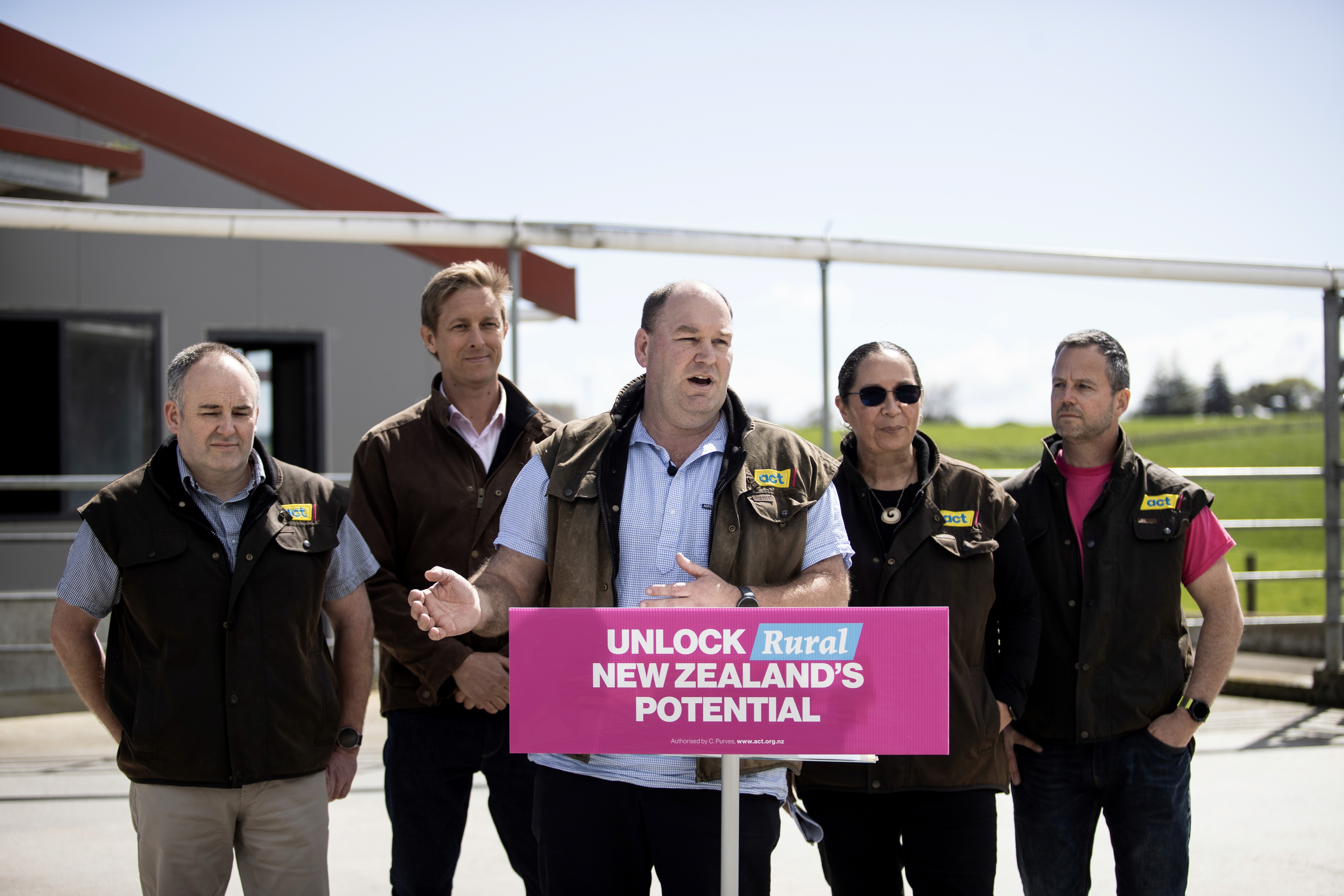
A strong payout is welcome. What matters is what’s left after the bills are paid. Farming should offer the chance to get ahead and build a future for your family.
ACT will drive down farming costs and give farmers more freedom to farm. We’ll keep agricultural emissions untaxed and remove costly resource consents for routine work that meets clear standards.
ACT has already eased winter grazing rules and kept agriculture outside the ETS. Party Vote ACT to lock Labour out and unlock New Zealand’s potential, and give the next generation the freedom to farm.
Read ACT’s full plan to Make Farming Fun Again here.
ACT will:
Drive down farming costs
Keep agricultural emissions untaxed. Keep agriculture permanently out of the Emissions Trading Scheme and oppose any agricultural emissions tax or pricing scheme.
Cut the carbon tax driving up the price of fuel and other farm inputs.
Remove resource consent costs for routine farm work that meets clear national standards.
Let farmers change what they farm without needing a resource consent where the change is consistent with National Standards.
Make councils pay fair compensation when they restrict private land through overlays such as Significant Natural Areas or Outstanding Natural Landscapes. Protect farmers from a return to Labour-style Significant Natural Areas rules.
Cut government waste and balance the books without new taxes. Return to surplus faster and pay down debt, helping ease pressure on inflation and interest rates. Keep the Reserve Bank focused on controlling inflation.
Give farmers the tools to grow
Speed up access to proven agricultural chemicals and veterinary medicines by recognising trusted overseas approvals, reducing regulatory costs and improving access to competing products.
Remove unnecessary restrictions on agricultural drones and other technology that can improve productivity and reduce operating costs.
Introduce a Rural Workforce Visa and keep employment settings that make it easier for farms and rural businesses to recruit and employ staff.
Cut red tape around homekill and make it easier for farmers to sell their products directly to consumers.
Respect farmer-owned companies’ right to make commercial decisions without political interference.
Back rural families and communities
Fund 100,000 additional rural Police patrol hours each year and establish a dedicated rural crime unit.
Strengthen offences and penalties for livestock theft and poaching. Introduce Three Strikes for Burglary, with a minimum three-year prison sentence without parole on a third conviction.
Increase penalties for illegal rubbish dumping, so farmers are less likely to be left with someone else’s clean-up bill.
Allow rural children to use spare seats on existing school buses going to nearby schools wherever practical.
Keep Agricultural and Horticultural Science as a standalone Year 11 subject.
Strengthen vocational pathways into careers such as agriculture and horticulture.
Expand everyday healthcare through pharmacies, including management of stable long-term conditions. Enable 24-hour prescription e-lockers, reducing travel and time away from the farm.
Extend Text 111 eligibility to rural areas with unreliable voice coverage.
Back practical environmental work
Commit to long-term funding to eradicate wilding pines, and direct DOC to coordinate pest control across public and private land, reducing the burden on individual farmers.
Make permanent forest owners carry their forests’ long-term costs and risks, including sufficient pest control.
Allow targeted grazing on suitable DOC land to control weeds and fire risk.
Redirect $4.5 million a year within MPI to keep catchment-group funding at $13.5 million, allowing further funding where groups demonstrate strong water-quality results.
Expand voluntary conservation through biodiversity credits and the QEII National Trust.
Set clear rules farmers can work with
Put property rights first in the national rules under the new RMA laws. Focus on measurable environmental harm and local conditions, developing standards with farmers, growers and councils.
Introduce at least ten new permitted activity standards covering farm plans, vegetable growing, on-farm water storage, gravel extraction, drain maintenance, effluent management, fertiliser application, farm quarries, wetland restoration, and small- and medium-scale solar. Activities meeting those standards won’t need a resource consent.
Keep freshwater farm plans practical and affordable, with clear rules focused on actual environmental harm and local conditions.
Require councils to use a science-based national method for setting freshwater limits, reflecting differences between catchments. Remove Te Mana o te Wai and other vague spiritual concepts, and prevent their return under another name.
Strengthen property rights through the New Zealand Bill of Rights Act.
Review the Sharemilking Agreements Act so it reflects how farming businesses operate today.
End costly climate policy
Repeal the Zero Carbon Act and end the Net Zero target.
Abolish the Climate Change Commission.
Remove the artificial ETS price floor encouraging blanket carbon farming.
Recognise methane’s different warming effect from carbon dioxide.
Prevent international climate commitments imposing costs overseas competitors avoid. Reconsider the Paris Agreement if New Zealand cannot secure a fair deal.
In our team's words:
ACT Agriculture Spokesperson Andrew Hoggard says:
“There’s nothing fun about paperwork, especially when it’s pointless, yet farmers have been hit with endless new rules and freshwater regulations, Significant Natural Areas [SNAs], winter grazing, emissions pricing, the ute tax, firearms changes, health and safety paperwork, and resource management red tape. Successive governments piled on the rules, adding costs and uncertainty to running a farm.
“Farmers do not need another politician telling them how to farm. They need a Government that respects property rights, sets clear rules around genuine environmental harm, and otherwise lets them get on with it.”