菜单

菜单

菜单

菜单

返回

新闻稿

Speech to nib Health Innovators' Summit: ACT’s pharmacy as primary care plan - David Seymour

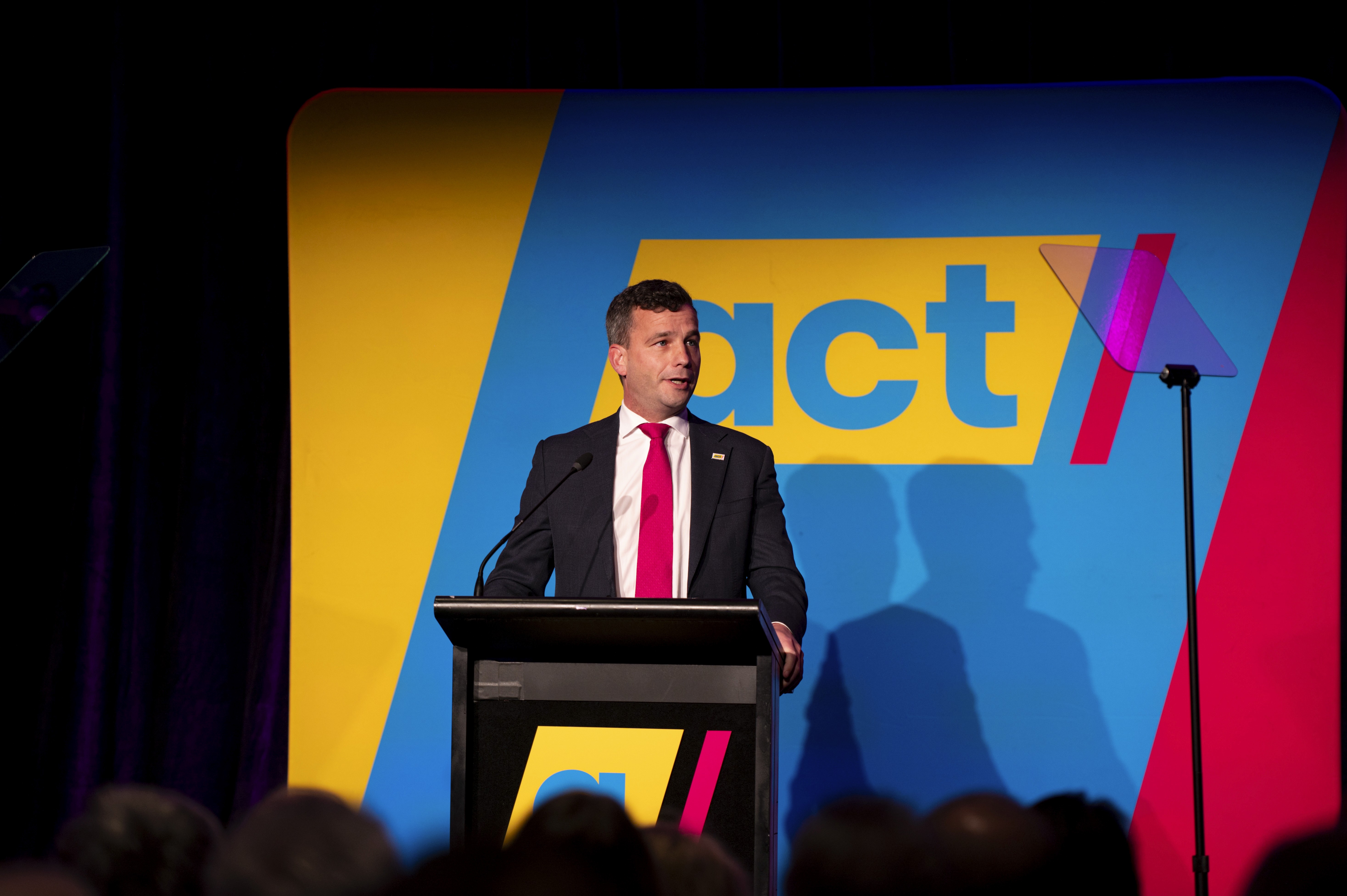
David Seymour delivered this speech to the NIB/NZ Initiative Health Summit, outlining some new ACT health policy in Auckland.

大卫·西莫尔

Speech to nib Health Innovators' Summit  ACT's pharmacy as primary care plan, Tuesday 5th May
David Seymour, ACT Leader

Introduction

Good morning.

Every person in this room knows New Zealand’s health system is under pressure. EDs can resemble war zones, GPs have waiting lists longer than a hospital corridor.

We’re not short of expertise in New Zealand. We’re a modern country, with good medical schools and quality medical professionals. More often than not the system knows what care a patient needs and how to get it.

It’s the wait to get in front of the professional that is the problem. Our healthcare problem is really an access problem. The solution is to better utilise the skills we have, getting the right patient in front of the right professional at the right time.

Everyone can sign up to that goal, but how? Specifically, I’d like to talk today about a tangible step towards making better use of the talent we have in healthcare.

The Opportunity of Pharmacy

Better utilisation of pharmacy is an opportunity to achieve multiple goals.

First of all, robotic dispensing has freed up pharmacist time. Pharmacists spend less of their time ‘counting and pouring’ as one recently put it to me. Machines do that now. There is a dividend of health professionals’ time to take advantage of.

Second, despite that productivity gain, there is a real danger we will lose the network of community pharmacies. The revenue stream that came from selling shampoo and lipstick is under pressure from the chains.

Third, there is that shortage of skill in the right place that leaves us crying out to bring that dividend to bear on one of our most urgent problems. We need to raise productivity, but it is not productive to have GPs dealing with colds or A&E’s acting as overflows for GPs.

I would like to say this idea is world-leading. Unfortunately, I need to tell you this is not about getting ahead, it is about keeping up our friends around the world who are already taking advantage of these possibilities.

Many current ailments could be better dealt with at a pharmacy, creating a win-win-win for community pharmacies, the rest of the system and, most importantly, patients.

A parent with a child who has an ear infection. A worker with a chest infection who cannot afford to wait a week. An older New Zealander who needs their regular medicine renewed, or a blood test ordered.

These are not unusual or highly complex health needs. They are common, everyday situations. But too often they are left to make a GP appointment, wait, and hope the problem does not get worse.

The latest New Zealand Health Survey shows that one in four adults said the time taken to get a GP appointment was a barrier to seeing a GP in the previous year. That is more than double the rate recorded in 2021/22, when it was 11.6 per cent.

The problem is not just a bad winter, or a few practices under pressure, or a temporary backlog. The problem is structural.

New Zealand already has more than a thousand community pharmacies contracted with Health New Zealand. They are in towns, suburbs, and communities across the country. People already go to them for advice, medicines, vaccinations, and minor health needs.

Pharmacists are not shopkeepers. They’ve gone through years of qualifications and are trained health professionals. They understand medicines, interactions, side effects, adherence, and when a patient needs to be referred on. They are a workforce that is currently underutilised.

The Government has already recognised this. We’ve expanded the list of medicines that pharmacist prescribers can prescribe and expanded the role for community pharmacists (access to more funded medicines directly via pharmacy for common health conditions.

From June 2026, pharmacists can treat six conditions: UTIs, conjunctivitis, head lice, scabies, oral rehydration, and the emergency contraceptive pill. That is a good start, and we can go further.

ACT wants to let pharmacies do three things they can’t do today.

First, pharmacies should be able to treat more everyday conditions.

Second, pharmacies should be able to help manage long-term medication and order routine blood tests where appropriate.

Third, pharmacies should be able to provide skin lesion triage and monitoring.

We think these small changes will better utilise the expertise of the workforce and provide Kiwis with more options for healthcare. It will greatly free up overwhelmed GPs and EDs by spreading the load.

Treat more everyday conditions

As the Minister of Health and I announced in April, from June pharmacists can treat six conditions: UTIs, conjunctivitis, head lice, scabies, oral rehydration, and the emergency contraceptive pill. Why not extend this to chest infections, ear infections, skin infections, and acute pain.

If your pharmacist can sort it out, you don’t need a GP appointment.

Around one in four adults report that the time taken to get an appointment was a barrier to seeing a GP. Among children, around one-in-five faced the same problem. Those rates have more than doubled in four years.

These conditions are often treated with a course of prescription medicine - antibiotics for chest or ear infections, topical treatments for skin infections, pain relief and the like. If the pharmacist can treat the condition directly, the patient gets a good result, and it saves a logjam of appointments in another part of the system. 

This model is effectively proven in New Zealand. In 2023 Health NZ ran the Minor Health Conditions Service (MHCS) pilot across eight regions. More than 120,000 people went to a pharmacy instead of a GP for treatment of conditions like acute diarrhoea and dehydration, eye infections and inflammation, pain and fever, scabies, headlice, eczema/dermatitis and minor skin infections.

Patients were surveyed afterwards. Satisfaction with the care they received was broadly similar to a GP visit. Eighty-eight per cent of participants had their needs met through the pharmacy consultation.

There would still need to be clinical rules. Pharmacists would need to know when to treat and when to refer. Some patients will still need a GP. Some symptoms will still need urgent medical attention. But that is exactly how triage works.

Manage your long-term medication

The second proposal is about long-term medication.

For a lot of people their main interaction with the health system is ongoing management for a condition.

A person might know their medication is working and simply need it renewed. They might need a blood test to check that the dose is right, or that there are no side effects. But instead of a quick, practical interaction with a trained health professional, they are sent back into the GP queue.

We’ve already made inroads in this area by bringing in 12-month prescriptions, a practical change that makes life easier for patients. We can build on that.

We would allow pharmacists to manage long-term medication for appropriate patients, including ordering blood tests where needed.

The GP would retain overall clinical visibility and responsibility. Results would be integrated into the shared health record. Pharmacists would manage routine monitoring and identify when a patient needs to be referred back to their GP.

The potential scale is significant.

In New Zealand, approximately 1.1 million adults are on antihypertensive medication. Around 250,000 New Zealanders have diagnosed type 2 diabetes. Around 600,000 are on statins.

Not every patient in those groups would be suitable. But a large number of stable patients could have routine medication reviews managed more conveniently through their local pharmacy.

The UK has tried this, and patients demonstrated approximately a 10 per cent improvement in medication adherence sustained at six months. Australia also reports improved medication adherence and clinical outcomes.

That means a patient on stable long-term medication could have their treatment monitored more conveniently. It means problems could be picked up earlier. It means fewer unnecessary GP appointments for routine medication issues. And it means GPs would have more time for complex patients who genuinely need a doctor.

Check your skin

The third proposal is to allow accredited community pharmacies to provide skin lesion triage and monitoring.

‘Slip, slop, slap and wrap’ is seared into most of our brains but New Zealand’s Melanoma death rates remain the worst in the world.

Early-stage diagnosis is the best way to get on top of it, this would provide people with more accessible and affordable options for having a concerning lesion assessed and monitored.

Under ACT’s proposal, a trained and accredited pharmacist would use a dermatoscope and an approved AI risk-assessment tool to assess a lesion. This wouldn’t be a diagnosis but would act as a triage. They would collect the image, run the risk assessment, explain the outcome to the patient, and follow a standard pathway.

There would be two possible outcomes.

If the lesion is above the risk threshold, the patient would be referred to a GP or specialist, with the dermoscopic image attached. That means the next clinician receives useful information from the first assessment, rather than starting from scratch.

If the lesion is below the risk threshold, the image would be securely stored, and the patient would be scheduled for longitudinal recall. They would receive an automatic reminder to come back so the lesion can be compared over time.

The patient would pay a fixed fee, indicatively around $25 to $40. That is intended to be materially cheaper than a standard GP visit. Typical GP visit fees are around $45-$100, so this service would sit at around half that price point, depending on final pricing.

Assessments would be documented in the shared health record, so the service is integrated with the rest of the health system.

The AI dermatoscopy reports sensitivity in the 85–95% range and specificity in the 70–85% range, broadly comparable to general practitioner performance and approaching specialist dermatologist performance for in-scope lesion types. Platforms such as Conporto Health and ReCare Early Care provide the clinical governance, image storage, and decision-pathway architecture needed to deliver this service consistently and at scale.

This could start as a regional pilot, much like the pilot for minor health conditions.

Conclusion

I’d love to hear your thoughts on the policies I’ve just outlined.

The aim is to use New Zealand’s existing health professionals and infrastructure, but to use it smarter and more effective.

Wellington has proven over and over again that more bureaucracy does not improve outcomes for patients. Not every solution needs to be complicated, smarter thinking like this will be what helps us fix what matters for patients in New Zealand.

Pharmacies are already in communities across the country. They are accessible. They are trusted. They are already contracted by Health New Zealand. And pharmacists are already trained health professionals.

If we can better utilise their expertise, that will be a step toward a more accessible, more efficient, and more patient-focused health system.

保持最新动态

注册我们的网站通讯

授权人:C Purves,套房 2.5,27 Gillies Avenue,Newmarket,奥克兰 1023。
©2025 ACT 新西兰。版权所有。

保持最新动态

注册我们的网站通讯

授权人:C Purves,套房 2.5,27 Gillies Avenue,Newmarket,奥克兰 1023。
©2025 ACT 新西兰。版权所有。

保持最新动态

注册我们的网站通讯

授权人:C Purves,套房 2.5,27 Gillies Avenue,Newmarket,奥克兰 1023。
©2025 ACT 新西兰。版权所有。