返回
新闻稿
Speech: Making Immigration Work for New Zealand
I'd like to talk about an issue that cannot be ignored. It is easily abused for political purposes, but does contain real policy problems.

大卫·西莫尔

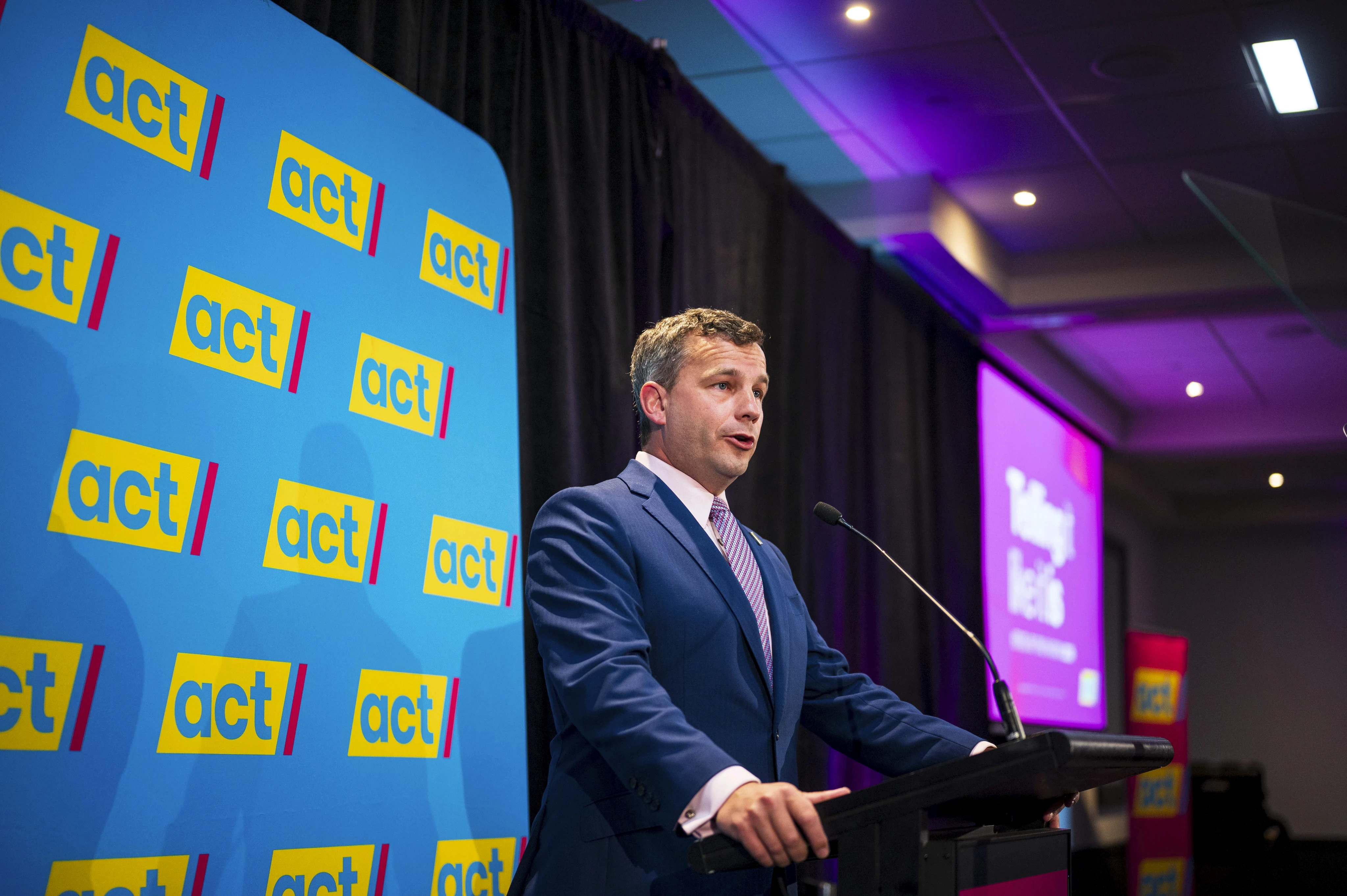
David Seymour, ACT Leader
Captain Bougainville Theatre, Forum North, Whangarei Friday 1 May, 2026
Intro
Welcome and thank you for listening to me speak today. I'd like to talk about an issue that cannot be ignored. It is easily abused for political purposes, but does contain real policy problems. Today it dominates headlines around the world. Those countries’ experience show us that responsible politicians, who take policy seriously, need to address it, or someone else will.
The issue is immigration policy. It’s the question of what rules we as settlers of this great country place on those who would like to follow behind us.
I said the issue is easily abused. That’s because there are at least some New Zealanders who simply resent others for looking differently, sounding differently, or thinking differently. Not only that, but they focus on a particular kind of difference — being from a different race.
The ACT party has a proud heritage of opposing racial discrimination. We stand for the values of universal human rights. We defended free speech, the rights of oppressed minorities, and even the right to choose how your life ends if you are ill. We have spoken up and opposed attempts to socially engineer a nation into a partnership between races.
Our Nation of Settlers
Instead, we promote New Zealand as a society of settlers. We say this country is united by a journey that we can all find in our personal histories. For some of us, that journey was made in open boats 700 years ago. For others, the journey ended this morning, and a new life began at the Auckland International Airport arrival gates.
No matter how we came, we all made the journey to become New Zealanders. And making that journey says something else about us, too. We are pioneers. Each of us have the spirit of adventure in our DNA. That spirit brought us across the world's largest ocean, to settle its last significant uninhabited landmass.
Each wave of settlers has brought their culture, often their cuisine, and sometimes their faith. These contributions have enriched New Zealand. They have made us a more interesting, more vibrant, and more exciting place to live.
However, each wave of settlers has accepted a Common Core of values. You are welcome to practise your faith, your culture, and speak your language, so long as you respect the freedom of all others to live their way. By doing so, these waves of settlers built the most tolerant, compassionate, and inclusive society in human history.
We pride ourselves on being friendly and accepting. We are recognised around the world for our commitment to fairness. The New Zealand character is respected around the world.
These waves of settlers also built the country physically. Each wave left behind more than they demanded from it. They helped to build the schools, the roads, the hospitals, and the courthouses required for the first-world society that they sought out in the first place.
We know they must have contributed more than they used because there is so much here. In less than 200 years, New Zealand has gone from a series of isolated villages to a network of modern cities connected by road, rail, air, and sea, with electricity, the Internet, and the three waters.
When I walk past Remuera primary school, I see the foundation year on the gate. I marvel at the way early settlers pitched together to give their children an education. That school was built in 1874, three years before parliament even passed the 1877 Education Act.
Why New Zealand still needs immigration
That is the inheritance of our settler society. It's one we should be proud of, and it is a pattern that will continue in one form or another. Our society needs the influx of new migrants to grow and develop.
Some people will disagree with me. They’ll say things like ‘we need to employ our own people first.’ If you’re talking welfare reform, you’re talking my language, but it’s a conversation for another day.
But when it comes to migration we have to look at the big picture. I know this to be true because there are no modern export-led economies where all the skills come from three million people. You might wonder why I said three million — that's because when you take out a million children and a million retirees, 3,000,000 is what you have left to get everything done.
Try as they might, Kiwi parents don’t always produce the perfect amount of nurses, software engineers, and farm workers each year. Even if they did, sometimes people just don’t want to do those jobs. In rural New Zealand, where populations are lower, it’s a heck of a lot harder to find a local willing to get up first thing in the morning, milk cows for a few hours in a frost, and then do a hard day’s work on the farm.
There’s also the problem of an ageing population — there just aren’t enough people at the right stage of life for the place to work. This is why every city, State or Province of three million people relies on migration.
You couldn’t imagine Denmark, British Columbia, or Colorado leaving the E.U., Canada or the U.S. They each have a total population of around five million. They are all part of a much larger labour market, where businesses can get the skills and workers they need to grow and compete.
If we limit ourselves to three million, or even add in Australians who want to come here, we will not have the economy or the services we’ve all grown up expecting. People who deny the basic reality are doomed to fail.
I remember when New Zealand First campaigned on reducing net migration to 10,000 per year. They put Labour into government. Labour themselves had pulled the disgraceful ‘Chinese sounding names’ stunt that year, and campaigned on reducing net migration to 30,000 per year. When they were elected and formed their coalition government, there was net migration of 50,000. Two years later, before they closed the border for COVID, net migration had risen to 80,000.
If it wasn’t for COVID border closures, that Government would have been the record holders for immigration. It’s no wonder people are cynical about politicians’ promises on this topic. Then they gave open-ended residence visas, no questions asked, to 250,000 people that they let in pre-COVID. We are still dealing with the consequences of those choices today.
But they also tell us something about sensible immigration policy. People who say they're going to stop it have had their chance, and it passed them by.
Today’s Immigration Challenge
It is time for a mature discussion about immigration policy in our settler society. Today I'd like to address the very real challenges that New Zealand is experiencing. I believe there are three problems.
More and more settlers are challenging the democratic values that the societies they move to were built on. The recent Local Government election scandals should be a wakeup call to New Zealand. It was not a few people, nor was it a whole community, but never have we seen a group openly committed to stealing an election.
The rate of settlement has overwhelmed the ability to provide infrastructure. The way one economist put it to me, we’re forced to widen our capital base when we need to be deepening it. We have to keep building the same stuff for more people, instead of getting richer. Dunedin took 180 years to build, but we add the population of Dunedin in a couple of years. We’re not up for that level of infrastructure. We struggle to build one hospital in the actual Dunedin!
The immigration system is not doing what it promised. Too often I shake my head and ask, if we have a system targeting skilled migrants, how the hell did that guy get here? I mean, really, you’re supposed to be a brain surgeon but you can’t find an address on GPS? Thank god you’re not probing my cerebellum.
These three problems have one common cause. They all involve immigration breaking the patterns set by previous waves of settlers. We need to reclaim our heritage as a society of settlers. Wave after wave built the greatest physical and cultural society the world has ever seen.
Over the years ACT has offered to solve some of these problems. We’ve put forward policies but we’ve never put them front and centre. Most people felt New Zealand’s immigration policies were good enough. They were proud of our heritage as a nation of settlers and recognised the benefits immigration brings.
In my 2017 Book, Own Your Future, I said that there needed to be a balancing of infrastructure costs with immigration. I proposed a $10 a day infrastructure fee for the first year any person spends in New Zealand, whether they be a tourist or a migrant.
Many times in the past, and you can find me on the record here too, I’ve said we should ask new settlers to sign up to the conventions and beliefs the existing ones have created. We have something extraordinary here. The ideas that people should be free to live as they choose, without violence and prejudice. That is magical and we should defend it at all costs.
That’s why I’ve said we should ask new migrants to sign up to a New Zealand values statement. If you believe men and women are equal, that democracy is the best system, and religion is a private choice, then you’d be thrilled to find your new country celebrates those things. If you don’t like it, you shouldn’t migrate to New Zealand.
These are the kinds of things the ACT Party has long said, but hasn’t put front and centre. We’ve fought other battles in that time. We legalised euthanasia. We’re replacing the Arms Act after Jacinda scapegoated licenced firearm owners. We’re replacing the Resource Management Act. We stood up for landlords, farmers, small business owners, and countless others in their darkest hours.
Meanwhile the Labour-New Zealand First Government set a timebomb with immigration. It is called Resident Visa 2021. They found a quarter million people they’d let in before COVID, and gave them residency — a one-way ticket to citizenship — with none of the usual checks and balances. That reckless action has upset New Zealanders’ trust in immigration, and it’s time to take a long hard look at what we’re doing here.
The ACT Party believes immigration is our country’s past and present. In the future we must choose immigration that works for us.
Tonight I am announcing new ACT policy. It includes six changes to immigration that will restore the balance of our settler society. They are:
Deport serious offenders
ACT will ensure Resident Visa holders convicted of offences carrying sentences of 10 years or more can be deported no matter how long they’ve been here. This goes further than the Government’s current proposal to extend liability to 20 years.Skilled visas for skilled jobs
Accredited Employer Work Visas are meant to fill crucial skills gaps, but too often the gaps close and the categories remain wide open. ACT will have each skill category automatically expire every year. To remain open, they would need to show up-to-date evidence of demand.Opportunity, not dependency
ACT will introduce a five-year welfare stand-down for all residence class visa holders. That means no jobseeker support, accommodation supplement, or income-tested benefits for a migrant’s first five years here.A fair contribution for infrastructure
ACT will introduce a $6 per day infrastructure surcharge on temporary work visas, on top of existing charges. This ensures migrants contribute to New Zealand’s infrastructure from day one, before they start paying tax. The fee is expected to raise around $80 million a year, while remaining more affordable than comparable visas in Australia and the United Kingdom.Stronger English language requirements
ACT will extend basic English language requirements to all AEWV types. Lower standards will still be permitted for seasonal workers.Enforce the rules
There are 20,980 known overstayers in New Zealand right now. ACT will establish a dedicated overstayer enforcement unit within Immigration New Zealand. Platform employers such as Uber and DoorDash will be required to verify and report work rights. Employers who facilitate overstaying will lose their accreditation.
These changes represent a balanced and sustainable approach to immigration policy. Our economy absolutely depends on immigration. Anyone who overlooks or denies that basic fact is not being straight with you.
But it’s equally true that immigration won’t continue without popular support. Popular support means immigration needs to work for New Zealand. It cannot continue at the expense of the Kiwi character and the infrastructure that previous waves of settlers built up.
We need an immigration system that recognises New Zealand’s heritage as a nation of settlers. We need new migrants in order to grow and develop, but that migration must work for New Zealanders who are already here.
Tonight I’ve laid out a set of changes we have the power to make. If we make them we will find ourselves honouring our past and insuring our future. The Kiwi character we’ve created will be honoured. The infrastructural base we’ve built will keep growing. People will keep coming to this country for opportunity, and creating it for those who follow.
That is the Kiwi way, but it is based on fairness. Success requires a common set of expectations: respect our freedoms, uphold our democratic values, contribute to infrastructure, speak English, obey the law, and fill genuine gaps in the economy.