Back
Press Release
2026年2月21日星期六
Democratic Resilience and the Importance of Freedom
Speech to the International Symposium on Safeguarding Democracy and Freedom, and Countering Foreign Interference.
Ladies and gentlemen, distinguished guests, fellow speakers, and friends of freedom.
Thank you once again to the Tasman Union for hosting this important symposium and bringing everyone together today.
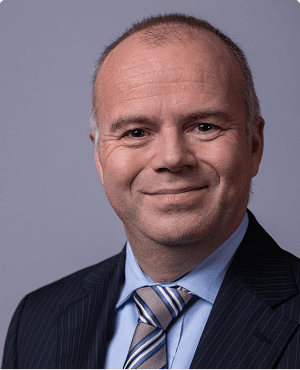
For those of you who don’t know me – and I’m sure that’s quite a few – I’m Todd Stephenson, a first-term ACT New Zealand Member of Parliament. While I don’t feel as qualified as many of the other speakers you’ve heard today, I’m very happy to add my voice to this important discussion.
I’d like to acknowledge my fellow Parliamentary colleague, Helen White. Helen and I will ensure our colleagues know about this event and what was discussed. That will include New Zealand’s Deputy Prime Minister, Hon David Seymour, whom I’ll be with this evening.
The Deputy Prime Minister is a strong supporter of Taiwan, and four of the current ACT MPs have visited that beautiful island.
I live in Queenstown. It’s a lovely place to call home. I was born and raised in Southland and attended university in Dunedin. I grew up in the 1980s and 1990s – a time when New Zealand was going through a great deal of economic liberalisation and social reform.
Over this period, our economy was opened up and government intervention reduced. We gained more economic freedoms in what we could produce and buy, and in how we conducted business.
Importantly, we further opened to the world as a trading nation – removing import licences, slashing tariffs, and eliminating subsidies. There were labour market reforms, asset sales, and other changes to the structure of the state.
There were also important social reforms: homosexual law reform, changes to the jurisdiction of the Waitangi Tribunal, New Zealand’s anti-nuclear policy, and – key to the establishment of ACT – the adoption of the Mixed Member Proportional voting system.
We can, of course, have different views on these changes. That is not the point. The point for me is that, growing up, I witnessed first-hand how New Zealanders could exercise their democratic right to vote for change. I came to appreciate for myself just how important democracy is.
Sadly, we live in a world today where democratic countries are vastly outnumbered by non-democratic ones. That’s why events like this are so important – to discuss and debate how we safeguard democracy and its accompanying values.
While New Zealand is one of the world’s longest continuous democracies, we cannot take that for granted. I am deeply committed to the principles of personal freedom, opportunity, and limited government that define our party and attracted me to politics.
In fact, one of the core principles of ACT as a political party is this: “That it is inherent in the nature of human beings as individuals that they are the owners of their own lives and must be free to act according to their own judgments so long as they accept and respect the like freedom of others.”
That sentence is underpinned by the important rights in a liberal democracy, including:
Freedom of expression and opinion (free speech)
Freedom of association and assembly
The right to vote and participate in government
Freedom from discrimination and equality before the law
The right to a fair trial and due process
Freedom of thought, conscience, and religion
Freedom of the press and access to information
As a Parliamentarian, it is important that I think about these rights – and others – every day. Free speech is one that is particularly important to me.
In a world where authoritarian regimes actively seek to undermine open societies through interference, coercion, and disinformation, the ability to speak freely is not merely a luxury – it is the essential mechanism that enables democracies to detect, debate, and defend against such threats.
Democratic resilience is the capacity of a society to withstand external pressures, internal divisions, and attempts at subversion while preserving its core values. Strong institutions, the rule of law, transparent governance, and alliances with like-minded nations all contribute. But none of these can function effectively without robust protections for freedom of expression.
I’ve faced criticism for hosting speakers others don’t agree with at Parliament. What I recognise is that freedom of speech has ensured, over the years, that minorities have been able to speak and advocate about issues important to them. It is a key right that protects minorities. As a Parliamentarian, I often give others the opportunity to express their views, even if I might not hold the same position.
Freedom of speech is the oxygen of democracy: it allows ideas to compete openly, exposes falsehoods, holds power to account, and fosters innovation and progress. Why does freedom of speech matter so much in countering foreign interference? Authoritarian actors – particularly from regimes like the Chinese Communist Party – rely on silencing dissent to maintain control. They export these tactics: intimidating diaspora communities, pressuring academics and media, spreading disinformation, and seeking to influence institutions through united front operations.
Without freedom of speech, we cannot openly discuss these threats, name them, or mobilise responses. Open debate allows us to expose united front activities, cyber intrusions, economic coercion, and attempts to infiltrate politics, universities, and civil society.
We must also continue to look at our protections within New Zealand. As a member of the Justice Select Committee, I was intimately involved in the review of the Crimes (Countering Foreign Interference) Amendment Act, which passed last year. These changes had been proposed for many years, and it was pleasing to see Parliament finally address them.
Today we also heard from PILLAR about their Foreign Influence Transparency Bill. I’ll certainly be taking this idea back for discussion with my colleagues.
We also need to call out other local curiosities when we see them.
Recently there has been a lot of media coverage about Jimmy Lai’s imprisonment in Hong Kong. New Zealand media, including Radio New Zealand, have carried the story – which you could say reflects badly on the Chinese government. However, I’ve been told that Radio New Zealand’s dedicated Chinese portal has not mentioned the story. Is this deliberate censorship, or are those staff involved in the portal worried about themselves and their families?
I’d suggest Radio New Zealand needs to examine the integrity of its Chinese news service while also ensuring the safety of its staff.
New Zealand has a proud tradition of defending freedoms – from our wartime contributions to our Pacific partnerships. We support a modern defence force focused on alliances, stronger ties with Taiwan, and vigilance against foreign influence. Friends, democratic resilience demands the active defence of the rights we take for granted.
By championing freedom of speech and related human rights, fostering cross-party and international commitments, and rejecting censorship in all its forms, we build societies that authoritarian interference cannot conquer.
Let’s commit to a freer, more resilient future together.
Thank you.